Why eight questions instead of one check?
Because your first explanation for what went wrong is confident, tidy, and very often completely wrong — and one check only catches one kind of wrong.
The Squad exists because that happened here. A bot swore up and down there were no famous birthdays today — on a day absolutely stuffed with them. Three confident, articulate, entirely incorrect explanations got said out loud before anybody bothered to go look at what the machine had actually done. When somebody finally looked, the real cause was obvious in about nine seconds.
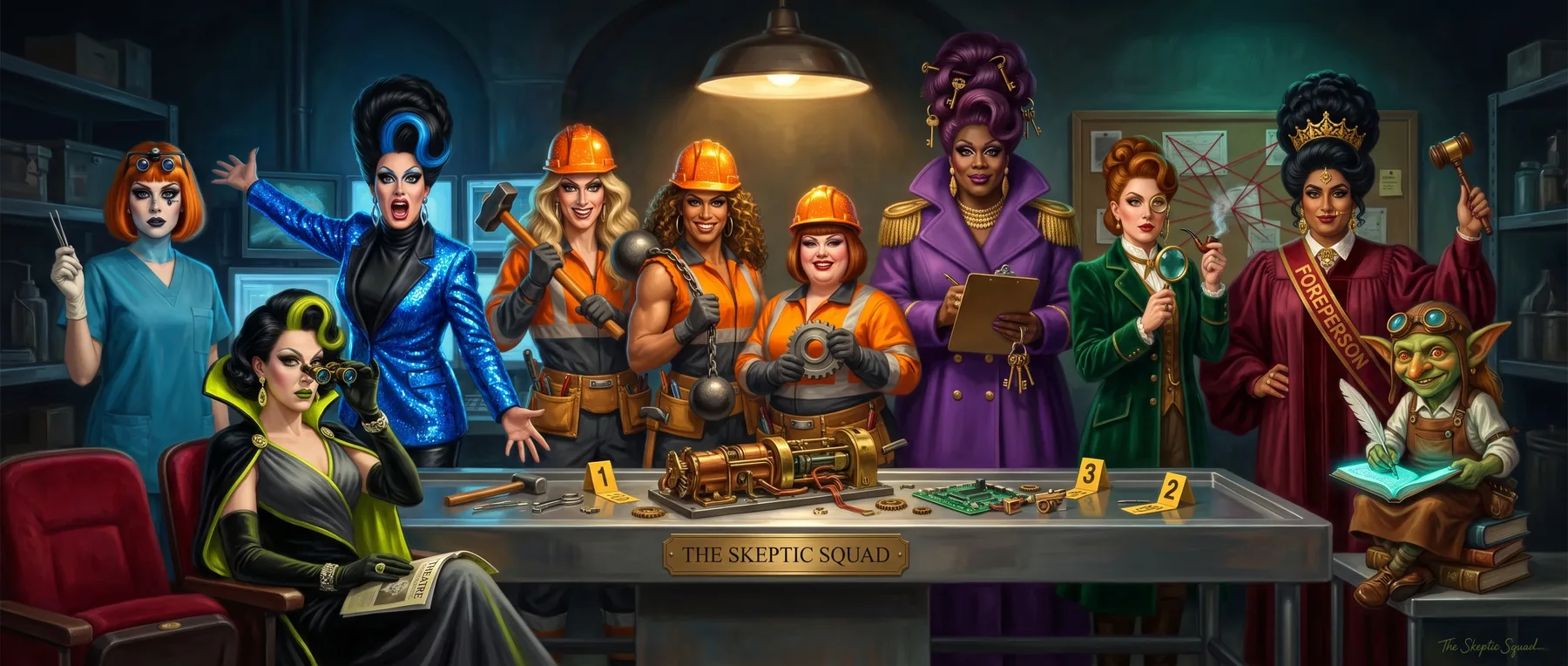
So instead of one voice saying “I think I know what happened,” there are now eight — and each one is professionally suspicious of something different. They are not real, obviously. They are eight questions with excellent hair.
They earn their keep. Every build plan that has ever been put in front of the full Squad here came back with at least one genuine blocker — four out of four — including one that would have quietly broken a live client’s product on the day it shipped. That is not luck. That is what a fresh, hostile pair of eyes does to a plan written by someone who already knows what they meant.
Who is in the Skeptic Squad?
Eight members. Each one catches a completely different kind of wrong — which is exactly why there are eight and not one. Sal goes first, because if you already own the thing, the other seven have nothing to check.
-

🔑 The Quartermaster
Sal Vage
She asks: do you already own one of these?
Before anybody builds anything, she walks to the back and checks the shelves. Half the time the thing you are about to pay for — or spend a whole weekend making — is already sitting inside something you bought last year and forgot about. She goes first, on purpose. If she finds it, nobody else has to do any work at all.
“Ma’am. We’ve got four of those in the back.”
Saves you from: building the thing you already have.
-
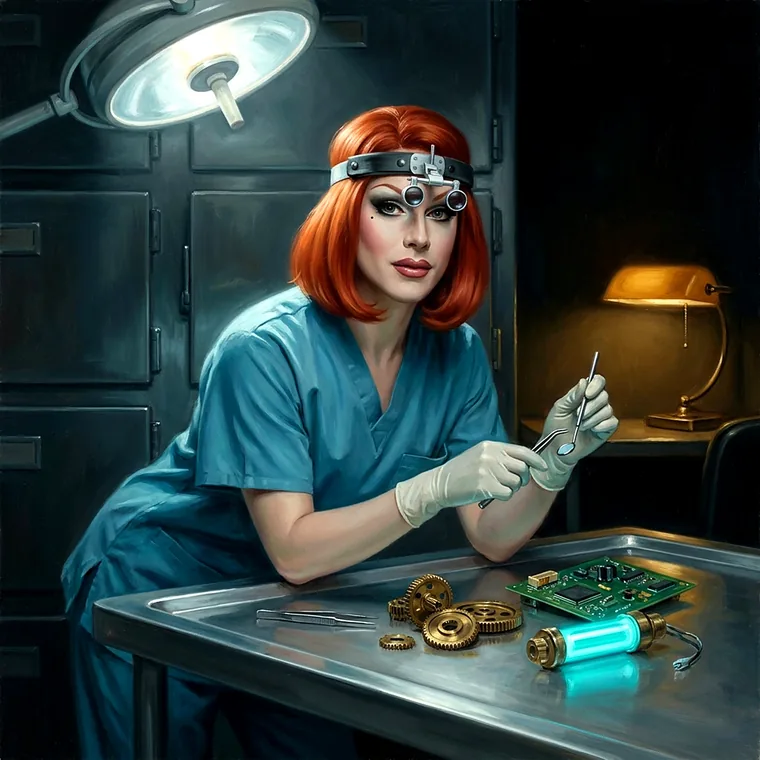
🔬 The Examiner
Dr. Skully
She asks: what actually went wrong here?
Not what looks wrong. The first thing you notice is almost never the thing that caused it. She is the one who opens it up and finds the real culprit instead of the nearest suspect.
“Come see what really killed it.”
Saves you from: fixing the wrong thing beautifully, then watching it break again tomorrow.
-

🔁 The Reproducer
Echo
She asks: can you make it happen again, in front of me?
She will not take anyone’s word for what went wrong — not yours, not the computer’s, not a note you wrote last Tuesday. If you cannot make it break on demand, you do not understand it yet.
“Don’t tell me what broke. Show me it breaking.”
Saves you from: spending an hour fixing a problem that was never actually there.
-

🔨 The Attackers
The Wrecking Crew
They ask: okay, but what if someone does this?
A trio who try to break your fix on purpose, from three different directions. What if somebody leaves it blank? Types something strange? Clicks it twice? They go looking for the hole so a stranger does not find it first.
“Cute fix. Now watch what I feed it.”
Saves you from: your customer being the first person to discover the problem.
-
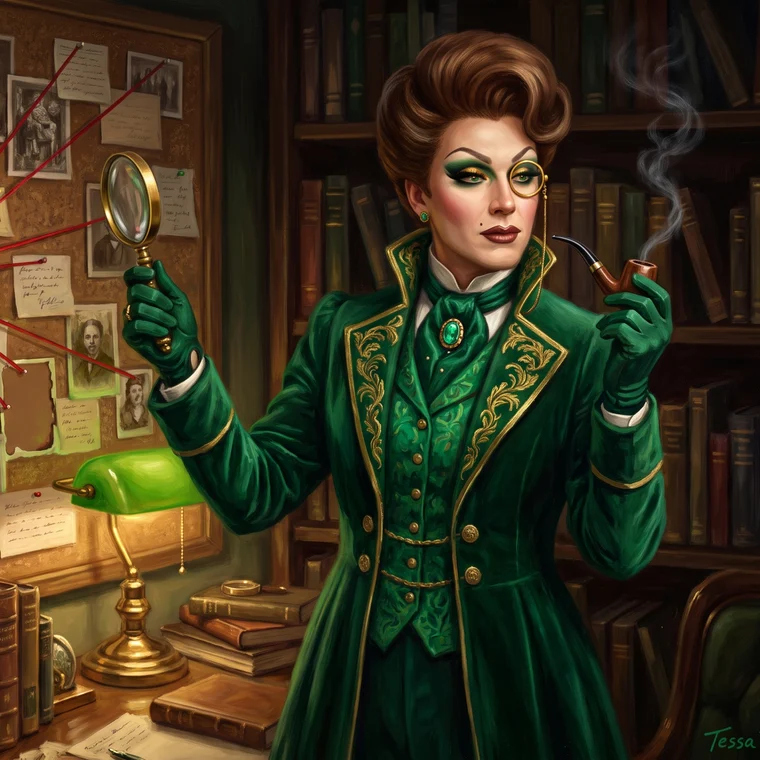
🔍 The Completeness Critic
Tessa Trace
She asks: where are the others?
A problem is almost never an only child. If it happened here, it is probably quietly happening in four more places nobody has looked at yet. She goes and looks.
“We patched one. Where are the other four?”
Saves you from: a week of whack-a-mole, one surprise at a time.
-

🎟 The Recipient
Reeda Room
She asks: is this the answer?
Everyone else is checking the machine. She is the only one sitting in the chair of the person who receives the thing — and reading the actual words they will see. Not “is this true.” Is this what they came for.
“Correct is not the same as helpful, darling.”
Saves you from: a perfectly accurate answer to a question nobody asked — or a message nobody can reach.
-
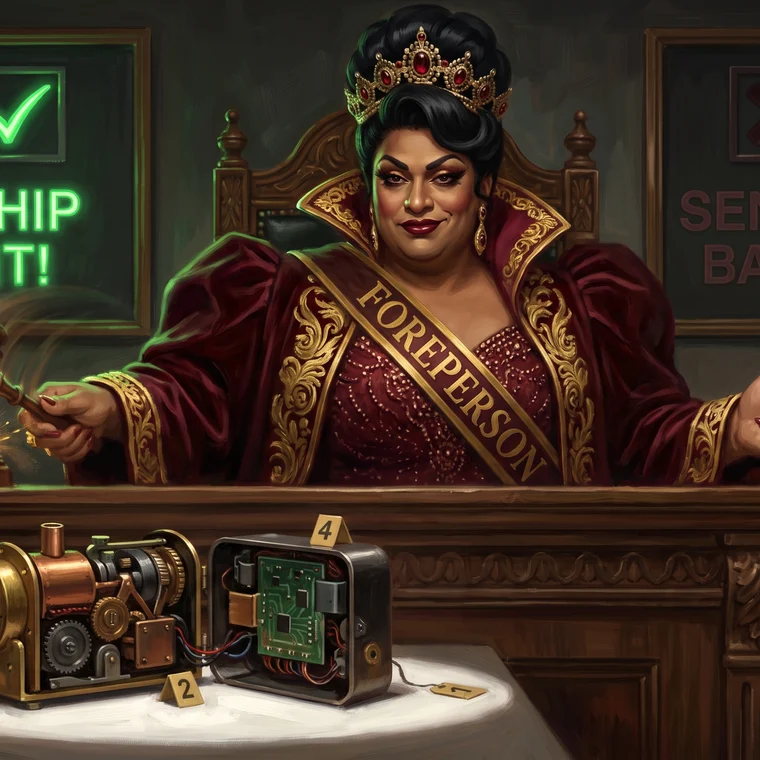
⚖️ The Forewoman
Vera Verdict
She asks: so — does this go out, or not?
Somebody has to actually decide. She looks at everything the others found and makes the call nobody else wants to make. Yes, or not yet. No maybes, no “let me just tweak one more thing.”
“The receipts are in.”
Saves you from: endless tinkering — or shipping something you already knew was not ready.
-
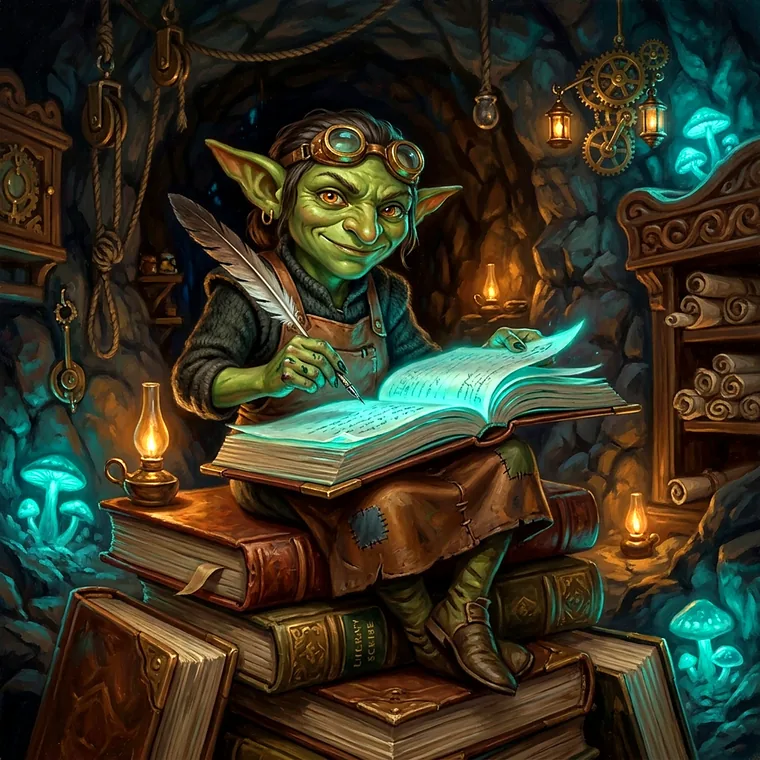
🖋 The Keeper
Quill
He asks: did anyone write this down?
The scribe goblin. He records what you decided and why, so the answer still exists in three months when everyone has forgotten the conversation that produced it.
“It’s in the book now.”
Saves you from: solving the exact same problem twice because nobody remembered the first time.
How do you actually use them?
You have just finished something and you are about to send it. You read down the eight questions below and you answer them honestly. That is the entire method. No tools, no code, no app — you, at your own desk, on a thing you just made. It takes about two minutes.
The eight were born on something already broken, so their questions are phrased that way on their cards up there. Here is the same eight pointed at something that has not gone wrong yet — which is where they save you the most.
- Sal Vage — Do I already have one of these? Before you make the thing, go and look at what you already own. Check the tools you pay for, the folder you made in March, the thing a friend already built.
- Dr. Skully — What do I actually know here, and what am I only assuming? Pick one thing on this you have not personally checked. Go check it.
- Echo — Does everything I just claimed still exist? Click your own link. Open your own attachment. Confirm the price, the date, the spelling of the name.
- The Wrecking Crew — What happens if somebody does the unhelpful thing? Hand it to the least cooperative person you can picture and watch what they do with it. And ask what door it leaves open — who else can get at this?
- Tessa Trace — What is missing? Not what is wrong with what is here. What should be here and isn’t.
- Reeda Room — Is this the answer? Read it once more as the person receiving it, not as the person who made it. Does it answer what they actually asked — and can they even reach it?
- Vera Verdict — Does this go out, or not? Say it plainly, out loud. “Yes” or “not yet.” There is no third answer.
- Quill — Did anyone write this down? If it was worth fixing, it is worth recording, or you will fix it again in March.
What that looks like on a real thing. Say you have just finished a launch email.
Sal: do I already have a launch email that worked? Yes — February’s. Start from that instead of a blank page.
Skully: I am assuming the discount code works. Have I typed it in myself? No. → type it in.
Echo: click the link to the sales page. It 404s, because the page is still a draft.
Wrecking Crew: what does someone do who reads the subject line and nothing else?
Tessa: there is no way to reply to this, and no P.S.
Reeda: read as the person opening it — it answers “what is it” three times and never once says what it costs.
Vera: not yet.
Quill: note that the sales page has to go live before the email can.
Two minutes. One 404 that was going to your entire list.
You do not summon all eight for every little thing; you would never finish anything. And most of the time, seven of them shrug and you move on.
The whole point is the one that doesn’t.
What is the Squad’s creed?
No cause without a body.
No fix without a fight.
No promotion without the receipts.
Translated: don’t guess at what went wrong — go and look. Don’t trust a fix until you have tried to break it. And don’t send anything out into the world until you can actually show that it works.
Questions people ask about this
Do I need to know how to code to use the Skeptic Squad?
No. Not a single line. These are eight questions about your own judgment, and they work identically on a launch email, a client proposal, a spreadsheet, a workflow, or a bot. The characters exist so the questions are memorable, not so they sound technical.
Can I just hand the eight questions to an AI?
Yes. And on the first try it will lie to you.
Ask a chatbot to play Dr. Skully and tell you what is wrong with your work, and it will tell you your work is wonderful, offer a small thought about your formatting, and hand it back with a bow. It is built to agree with you. Pointing a flatterer at your own blind spots is not a review — it is a compliment with extra steps.
Two things fix most of that, and they cost nothing:
Ask one at a time. Eight questions in one prompt gets you eight shallow answers. One question, one answer, then the next one.
Don’t ask it to check. Ask it to disprove. “Find me the strongest case that this is wrong — and if you are not certain, treat it as wrong.” A machine sent hunting for problems goes and finds problems. A machine asked is this good? has already been handed the answer you want.
That will get you most of the way on your own. The part that takes actual building — eight of them running at once so they cannot quietly agree with each other, and firing every time instead of the times you remember — is what the Free Week is for.
Isn’t this just going to slow me down?
Reading down the eight takes about two minutes. Discovering the problem after you have sent it to a client takes considerably longer, and costs something two minutes cannot buy back. The Squad is not thoroughness for its own sake — every member exists because that specific kind of wrong has actually happened, on real work, more than once.
What if I work alone? I don’t have a team to review things.
That is exactly who this is for. A team gives you other people’s blind spots to cancel out your own; working alone, you have to build that in on purpose. Eight named characters are much easier to actually summon than a vague instruction to “be careful.”
Where did these characters come from?
A real bug, on a real day, in a real client’s product — the birthday bug described further up this page. A small army of skeptics was set loose on the fix and beat it through four rounds before a single line of it shipped. They were too useful to retire, so they got names, faces, and a permanent job.
Where do you learn to work like this?
In the Free Week — where you build two real things you own outright, and nobody sells you an eighty-eight-step course to get there.
The Skeptic Squad is one of the habits that comes with building your own tools instead of renting somebody else’s. When the thing is yours, checking it properly stops being homework and starts being the reason it keeps working.
Last updated 12 August 2026